Save on Plumbing Services Today
Tankless vs. Traditional Water Heaters: A Comprehensive Cost and Savings Comparison Guide
How These Systems Differ and Why It Matters
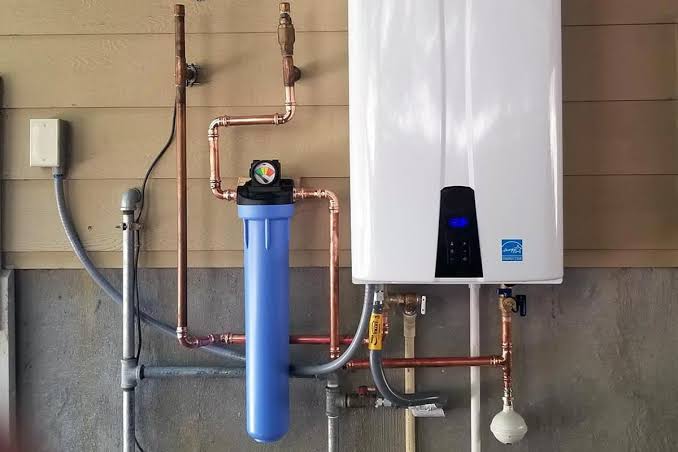
Traditional tank water heaters store 30 to 80 gallons of heated water in an insulated cylinder, maintaining temperature around the clock until you turn on a faucet. Tankless units, by contrast, heat water instantly as it flows through heat exchangers, delivering hot water on demand without any storage tank. The distinction sounds simple, but it creates cascading differences in cost, performance, and suitability for your home.
A tank system cycles on and off throughout the day to keep stored water hot, consuming energy whether you are using water or not. This standby heat loss accounts for roughly 10 to 20 percent of annual water heating costs in climates like Las Vegas, where garage-mounted tanks frequently sit in spaces reaching 120 degrees in summer and drop to the low 40s on winter nights. Tankless systems eliminate standby loss entirely because they only operate when you demand hot water, making them inherently more efficient from an energy standpoint.
The cost consideration extends far beyond the purchase price. While a traditional 50-gallon electric tank might cost $500 to $800 and a gas model $700 to $1,200, tankless units start around $1,000 for electric whole-house models and climb to $3,000 or more for high-capacity gas systems. Installation complexity amplifies the gap: tank replacement often reuses existing connections and venting, while tankless installations may require upgraded gas lines, new venting systems, or electrical panel modifications to support higher instantaneous loads. Understanding these fundamentals helps frame the true comparison, which ultimately rests on how long you plan to stay in your home and how much hot water your household actually uses during peak morning and evening hours.
Upfront Costs and Installation Requirements
The installed cost of a traditional water heater replacement typically ranges from $1,200 to $2,500 in the Las Vegas area, depending on tank size, fuel type, and whether the installation requires any code updates. A straightforward swap where the new unit matches the old footprint and connections generally falls at the lower end. If your replacement needs a catch pan, expansion tank, upgraded venting, or seismic straps to meet current building codes, costs climb toward the upper range. Labor for a standard tank installation runs four to six hours, and most residential jobs complete in a single visit.
Tankless water heater installation presents a different financial picture. The units themselves cost $1,000 to $3,500, and installation labor adds another $1,500 to $3,000 depending on the scope of work. Gas-fired tankless systems often demand upgrades because they require larger gas supply lines than tank heaters. A typical tank heater uses a half-inch gas line, while a whole-house tankless unit needs three-quarter-inch or even one-inch supply to deliver the BTUs required for instantaneous heating. Running new gas piping from the meter to the unit location can add $800 to $1,500 to the project. Electric tankless models avoid gas line costs but may require a panel upgrade to handle 100 to 150 amps of additional load, pushing electrical work into the $1,000 to $2,000 range.
Venting represents another hidden cost difference. Traditional atmospheric tank heaters vent through existing single-wall or double-wall flues. Most tankless gas units require Category III stainless steel venting or PVC, depending on condensing versus non-condensing models, and the vent material alone can run $300 to $800. In homes where the water heater sits in an interior closet or garage far from an exterior wall, venting runs add measurably to project costs. Bottom line: budget $2,500 to $6,500 for a complete tankless installation versus $1,200 to $2,500 for a tank system. The gap is real, and it matters when evaluating payback timelines.
Monthly Operating Costs and Long-Term Savings
Operating cost differences drive the long-term value equation. Traditional gas tank water heaters carry energy factor ratings around 0.60 to 0.70, meaning 60 to 70 percent of the fuel energy actually heats your water. The rest escapes through the flue, tank walls, and standby cycling. Tankless gas models achieve energy factors of 0.82 to 0.96, with condensing units at the high end capturing heat from exhaust gases that would otherwise vent outdoors. For a household using 64 gallons of hot water daily, the difference translates to annual gas consumption of approximately 250 therms for a standard tank versus 180 to 200 therms for a tankless system.
At current Las Vegas natural gas rates averaging $1.20 per therm, that 50 to 70 therm annual reduction saves $60 to $84 per year. Over a 20-year lifespan, cumulative savings reach $1,200 to $1,680, not accounting for future rate increases. Electric systems show larger percentage gains but often smaller dollar savings due to lower baseline costs. A tank electric heater with a 0.90 energy factor uses about 4,500 kilowatt-hours annually, while an electric tankless at 0.98 efficiency drops usage to roughly 4,100 kWh. The 400 kWh difference saves approximately $52 annually at local rates near $0.13 per kWh.
Las Vegas conditions affect these calculations in specific ways. Summer municipal water temperatures average 75 to 80 degrees, reducing the temperature rise needed to reach 120-degree delivery and lowering energy demand across both system types. Winter inlet water drops to 55 to 60 degrees, increasing heating loads. Homes with outdoor or garage-mounted tanks face more standby loss during temperature extremes, tilting efficiency advantages further toward tankless. If your household clusters hot water use during morning showers and evening dishwashing rather than spreading consumption evenly, tankless efficiency advantages compound because the system only runs during those peaks instead of maintaining temperature continuously.
Lifespan Expectations and Maintenance Requirements
Traditional tank water heaters typically last 10 to 13 years in Las Vegas, with lifespan heavily influenced by water hardness and how consistently homeowners flush sediment. Our municipal water averages 270 to 300 parts per million total dissolved solids, which qualifies as hard to very hard. Mineral buildup accelerates tank corrosion and insulates the heating element from the water, reducing efficiency and eventually causing leaks. Annual flushing extends tank life measurably, yet fewer than one in five homeowners perform this basic maintenance. Most tanks fail when the anode rod depletes and the steel tank begins to rust through, typically around year 10 to 12.
Tankless systems carry manufacturer ratings of 20 years or more, and real-world performance often validates those claims when maintenance protocols are followed. The absence of a storage tank eliminates the corrosion failure mode that kills traditional heaters. However, tankless units demand more frequent maintenance in hard water areas. Mineral scale accumulates on heat exchanger surfaces, reducing efficiency and flow rate. Annual descaling flushes using food-grade vinegar or commercial descaling solution keep heat exchangers clear and maintain performance. Skipping this maintenance leads to premature heat exchanger failure, cutting lifespan to 12 to 15 years instead of 20-plus.
Maintenance costs run $80 to $150 annually for professional tankless descaling versus $60 to $100 for tank flushing. Over two decades, you will replace a traditional tank once and possibly twice, incurring another $1,200 to $5,000 in equipment and installation costs, while a well-maintained tankless system continues operating. Water heater repair services for tankless units tend to be more specialized and expensive when components like flow sensors, ignition systems, or control boards fail, though failure rates remain low. The reliability advantage goes to tankless on lifespan, but traditional tanks offer simpler, less expensive repairs when problems arise within their shorter service life.
Choosing the Right System for Your Situation
The right choice depends on your timeline, usage patterns, and budget flexibility. If you plan to stay in your home 10 years or longer, tankless economics improve significantly. The higher upfront cost amortizes over two decades instead of one, and cumulative energy savings eventually exceed the installation premium. A household using 80 gallons daily will reach cost parity around year seven to nine, after which every additional year of service represents net savings. Conversely, if you anticipate moving within five years, a traditional tank replacement makes more financial sense because you will not capture enough operating savings to recover the tankless premium.
Usage patterns matter as much as timeline. Tankless systems excel when hot water demand peaks sharply during short periods rather than spreading throughout the day. A family of four taking morning showers within a 90-minute window benefits from unlimited hot water flow, while a tank might run out mid-shower for the third or fourth person. However, truly simultaneous high-demand events like running two showers, a dishwasher, and a washing machine at once can exceed a single tankless unit’s flow capacity, requiring careful sizing or multiple units. Traditional tanks deliver their full capacity regardless of simultaneous demand, then require recovery time to reheat.
Budget constraints often dictate the decision. If replacing a failed tank with limited available cash, financing a $6,000 tankless installation may not be practical even if long-term savings justify it. In those situations, installing an efficient tank model preserves cash flow and still delivers reliable hot water. When planning a proactive replacement or remodel with flexible budgeting, tankless installation becomes viable. Professional assessment of your specific home configuration, water quality, and usage helps identify the best path forward. Our team evaluates gas line capacity, electrical service, venting options, and installation logistics to provide accurate cost projections and realistic performance expectations, ensuring the system you choose actually fits your home and budget rather than requiring expensive surprises mid-project.